Homework
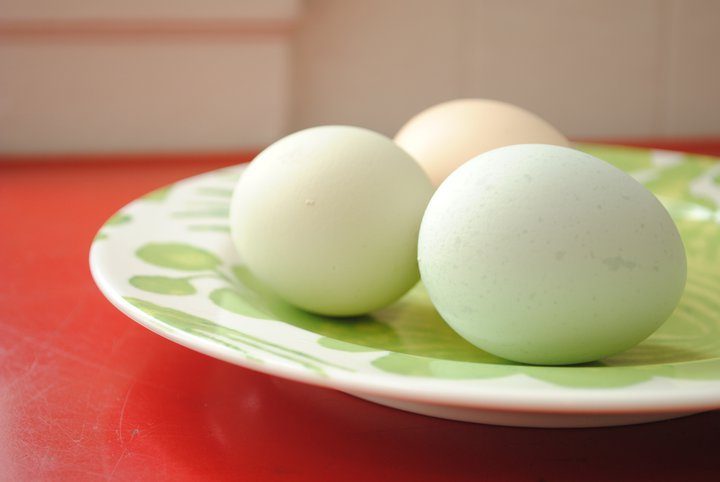
With the recipe for Eggs in Purgatory.
The nonnas like to have their own money to set aside in covered sugar bowls. They use the money for treats for grandchildren, for special gifts for their husbands’ birthdays, and of course, for the yards of yarn and fabric they need to crochet, knit, and sew. Pinafores for granddaughters are all the rage, and their machines whirr as they make one for each little girl in the family.
They earn their money doing homework that the neighborhood factories farm out. Stringing beads for necklaces and bracelets, crocheting pocketbooks in a multicolor pineapple stitch, or sewing trimming on almost-finished garments. At the end of each week, jobbers deliver the final day’s work and a small manila envelope filled with cash.
Each nonna works exclusively in her own kitchen. This Friday afternoon, one is creating elaborate iridescent necklaces. Her helpers: her daughter and a preteen granddaughter. Each knots the end of a length of waxed thread after drawing it through her needle. They add a metal tip to keep the beads from rolling off the thread. Then they begin: add one bead, make a knot, add a second bead, make a knot, until the thread is covered with iridescent “pearls.” The nonna adds a filigree clasp to each strand and fastens the necklaces closed. She places each finished glowing beauty into a satin-lined, midnight-blue velvet box and sets it next to other velvet boxes in a carton that the jobber picks up when he delivers work.
Dusting her hands together signals that the day’s work is complete, and the nonna fixes a snack. Coffee for her and her daughter, warm milk with a tablespooon of coffee and two sugars, and an egg biscuit for her granddaughter. And while they sip, they chat about—what else—food.
“It’s hard to make something without meat every Friday,” the nonna complains. “How many fish can I cook?
“Oh, Ma, please,” her daughter says. “You can make pasta with almost anything — peas, fish, beans, cheese, broccoli, or just garlic and oil — and you have a meal.”
“Well, I still find this no meat, not too nice.”
There’s a knock on the door and the nonna from next-door enters. She kisses the daughter, pinches the granddaughter’s cheeks, and says to the girl, “You’re getting so tall—like a beanpole.” The girl looks away and rolls her eyes.
“I hate to ask, but do you have any eggs in the house?”
“Sure, sure. How many?”
“I need six, but I only have four.” She helps herself to coffee and sits at the table, beginning her own what-to-cook on Friday litany. “I don’t mind not cooking meat, but I run out of ideas and Father Anthony is coming over for dinner.”
“So, you’re going to make a frittata, with potatoes?”
“No. I’m going to make something that’s a perfect Friday dish—it shows how I feel about not roasting a chicken: eggs in purgatory.”
The granddaughter looks shocked. The daughter stifles a laugh, and the nonna says, “Good for you.”
Eggs in Purgatory
Serves four
- 4 tablespoons olive oil
- 2 cloves garlic, peeled, quartered
- Two 8-ounce cans tomato sauce
- Salt and freshly ground pepper to taste
- 6 eggs
- 2 tablespoons fresh basil, torn
- 1/4 cup Parmigiano Reggiano, grated
- 6 slices country bread, toasted
- In a large nonstick skillet, heat olive oil.
- Add garlic; saute until golden.
- Stir in tomatoes, salt, and pepper.
- Simmer 15 minutes, or until sauce thickens slightly.
- Break eggs, one at a time, onto a small, flat dish.
- Gently slide each egg into the sauce; do not break yolks.
- Cover pan.
- Simmer 7 to 8 minutes, or until whites are set and yolks remain soft.
- Sprinkle with basil.
- Place atop a slice of toast.
- Serve cheese for sprinkling if desired.